
How to Sell Homes Without Model Homes
Many builders are re-evaluating the cost and effort required to build and maintain physical model homes. Rising construction costs, limited staff availability, and tighter timelines make the traditional approach harder to justify. At the same time, buyers expect to explore homes online, review floorplans, and understand finishes before stepping into a sales center.
The challenge isn’t buyer interest; it’s giving them enough clarity and confidence without relying on a built model.
This article explains how builders can sell homes successfully without model homes by using tools like a Virtual Design Center, and visual tools that allow buyers to visualize design selections in 3D. You’ll learn how modern workflows reduce cost, increase efficiency, and support a more reliable buyer experience.
How can builders replace a model home experience online?
Model homes help buyers understand layout, flow, and finishes, but they also carry significant construction, staging, and maintenance costs. Digital experiences now provide the same clarity without the long-term overhead.
A virtual showroom or interactive design center recreates the walkthrough experience digitally. Buyers can see layouts, finishes, and upgrade paths long before their first in-person appointment.
A digital design center standardizes how materials and options are presented, eliminating outdated binders, loose samples, and inconsistencies while significantly reducing the operating cost of physical displays.

What do buyers need to feel comfortable purchasing without a model home?
Even if a model home isn’t available, buyers still need clarity, visualization, and a structured path through the decision-making process.
A home builder design platform allows buyers to select home finishes and upgrades online and understand each option clearly. The ability to visualize design selections in 3D reduces uncertainty and improves decision quality.
Structured workflow paths and curated design packages also reduce the workload for your sales and design teams by guiding buyers in a more focused, predictable way.
How do digital design centers reduce costs and streamline internal workflows?
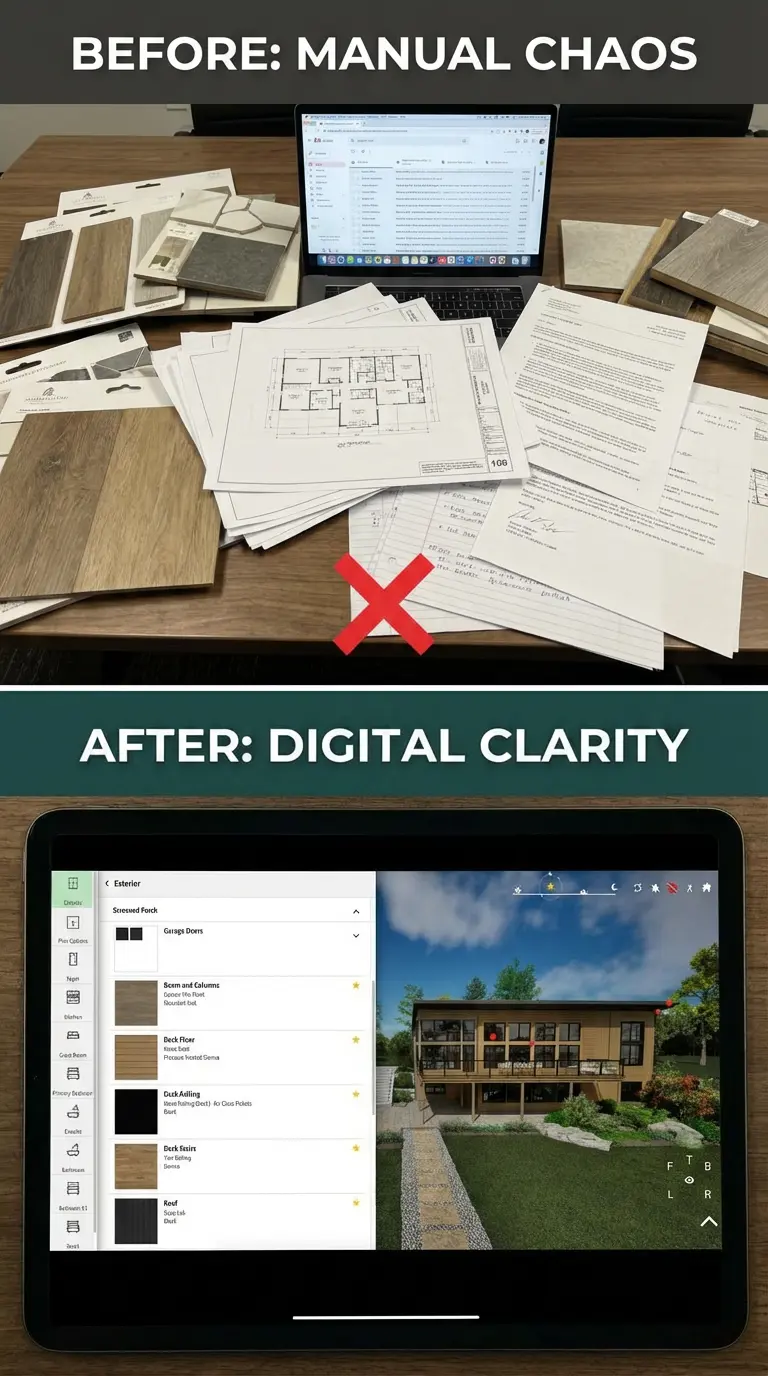
Without a model home, many builders rely on manual processes—sample boards, PDFs, emails, and repeated explanations—which create errors and require significant staff time.
A home options management system centralizes all finishes, upgrades, and structural choices in a consistent, up-to-date format. This reduces the cost of maintaining physical materials, eliminates outdated product options, and prevents expensive errors in later construction stages.
With an online home selections center integrated into production workflows, builders reduce:
- Time spent verifying selections
- Miscommunication between sales, design, and construction
- Rework caused by incorrect or missing information
- Delays caused by disconnected documentation
These savings directly improve efficiency and reduce operational costs.
What role does 3D visualization play when selling without model homes?
When buyers cannot walk a physical space, visualization becomes essential and is one of the most cost-efficient replacements for a model home.
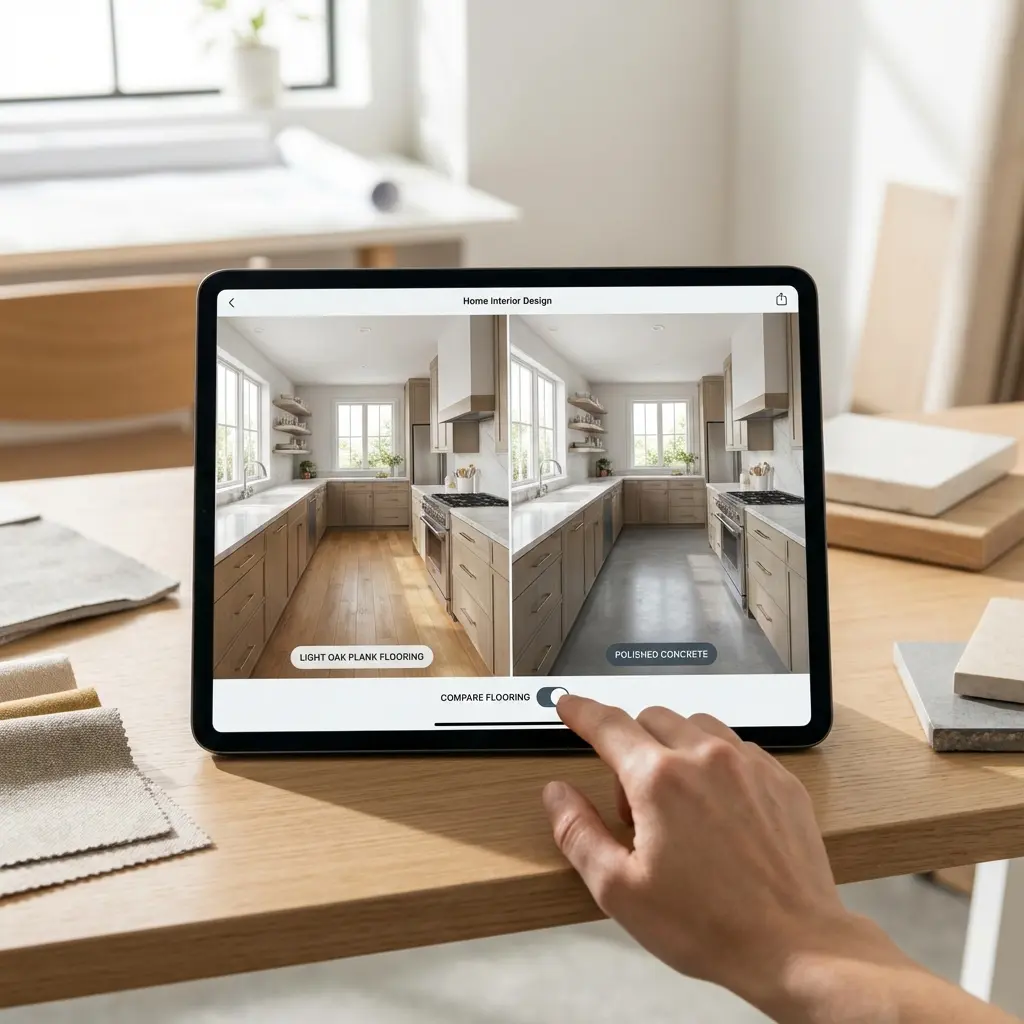
High-quality 3D views help buyers understand layout flow, lighting, proportions, and materials. Even simple comparisons, like toggling between countertop materials, create confidence.
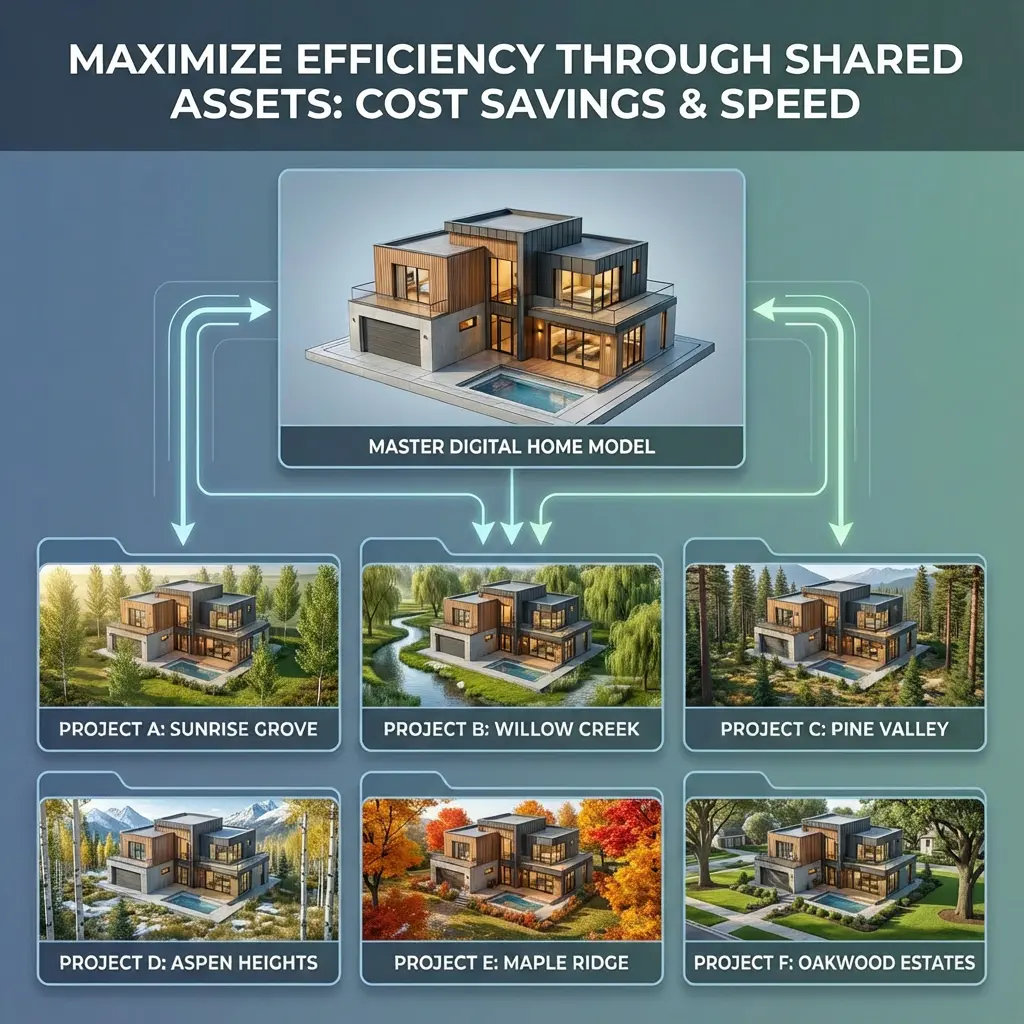
A virtual design studio allows builders to reuse the same digital assets across multiple communities. This eliminates the need for multiple physical models and lowers long-term sales and marketing costs.
How do digital workflows increase buyer engagement while lowering overhead?
Buyers who interact with digital tools early progress through decisions faster. They explore on their own time, become more informed, and require fewer lengthy appointments.
A virtual showroom experience also reduces staff hours by shifting early-stage discovery to an online environment, allowing teams to spend more time with qualified, ready-to-decide buyers.
For design teams, digital workflows reduce manual updates and eliminate repetitive clarifications. This creates a more predictable, efficient system, lowering operating costs across the sales-to-construction pipeline.
Can builders maintain accuracy without model homes, and does accuracy reduce costs?
Digital selections processes dramatically improve accuracy.
Manual workflows—emails, binders, spreadsheets—introduce inconsistency and confusion, which often lead to expensive errors. An integrated design-to-production platform captures every choice in a structured, shareable format that aligns sales, design, drafting, and construction.
Improved accuracy reduces:
- Change orders
- Construction mistakes
- Procurement issues
- Material waste
- Delays caused by unclear selections
Builders frequently report that accuracy improvements translate directly into lower construction costs and shorter build cycles.

The builder in the introduction eventually replaced physical models with a fully digital selections and visualization ecosystem. Buyers received the clarity they needed, and the builder reduced overhead, improved accuracy, and strengthened internal coordination.
This shift isn’t about eliminating model homes entirely, it’s about introducing flexible, efficient alternatives that modern buyers already expect. Reviewing your current selections workflow and identifying where visualization or structured digital tools can reduce cost is often the first step.
If you’re evaluating alternatives to physical model homes, consider reviewing which parts of your selections workflow could reduce cost or improve efficiency with structured digital tools.

Follow Us On Social