
The Hallucination Challenge: Why AI-Only Renderings Can Create Hidden Risks
A New AI Era with Hidden Risk
Artificial intelligence has revolutionised how we generate images, videos and even architectural visualisations. It has become a great tool, that if used correctly can conjure up photorealistic scenes in seconds, however, those results may sometimes include inaccuracies, often called ‘hallucinations’. When generative models “invent” details, proportions or textures that don’t exist, buyers can be misled, and trust erodes.
In this blog post, we will unpack the hallucination problem, explain why accuracy matters, and show how physically based rendering and interactive platforms like our Virtual Design Center (VDC) deliver trustworthy results.
What Is an AI Hallucination?
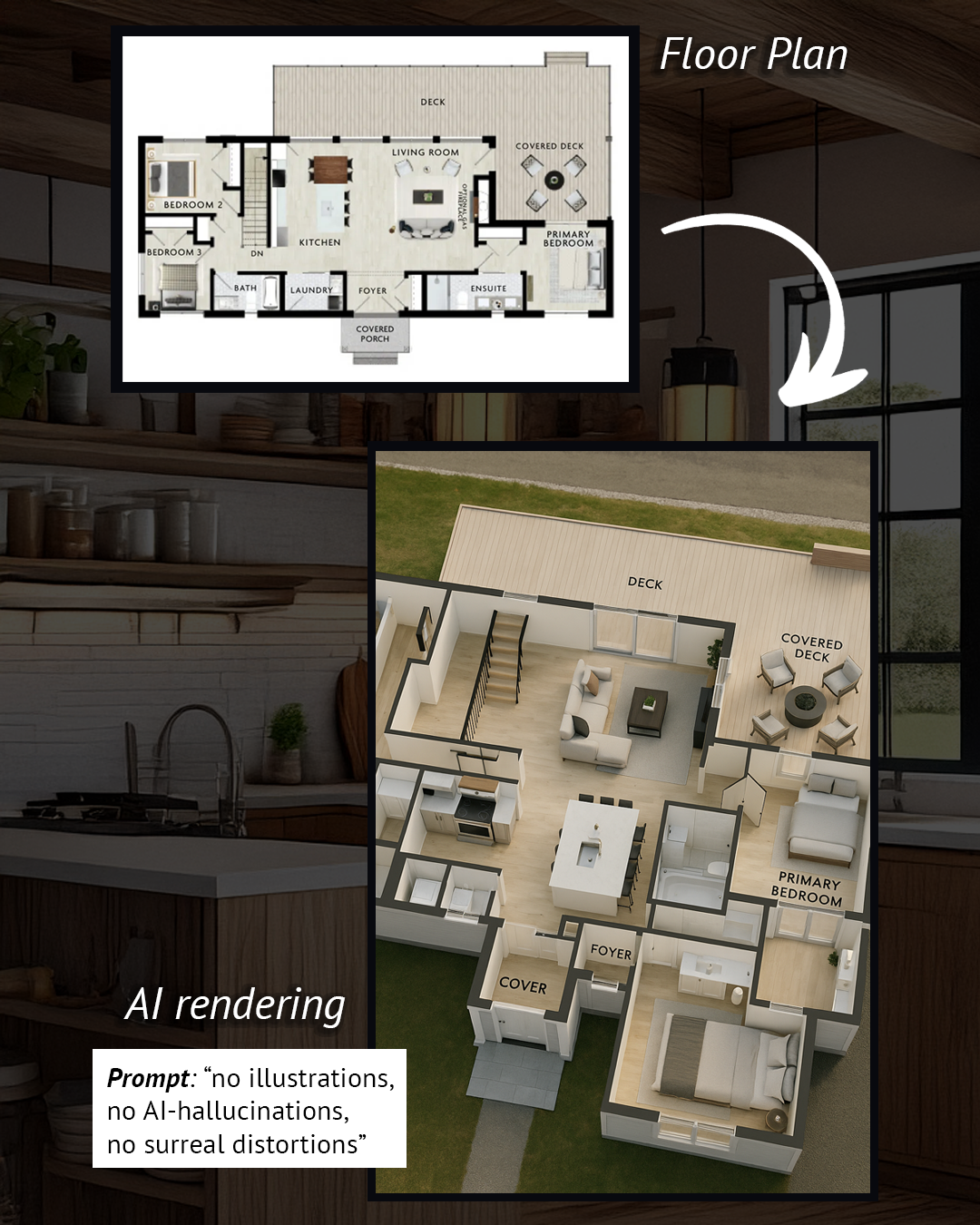
AI hallucinations occur when a model outputs inaccurate or fabricated details because it is trained on vast amounts of data without understanding the specific context. In architectural renders, hallucinations can manifest as:
- Incorrect proportions and geometry: Staircases floating mid‑air or rooms with impossible dimensions.
- Missing structural elements: Walls without support beams or windows where there should be none.
- Unrealistic materials and lighting: Wood textures behaving like glass, or lighting that ignores real‑world physics.
These inaccuracies stem from the model’s attempt to “fill in the gaps,” leading to scenes that look plausible but don’t represent the design intent.
Why AI Hallucinations Are Dangerous for Real Estate Marketing
1. They erode trust
Clients rely on visualisations to make significant financial decisions. If they later find that the property doesn’t match the renders, their trust in the developer, and your brand can diminish.
2. They prolong the sales cycle
Misleading visuals lead to more questions, corrections and revisions. This delays approvals and extends sales cycles, exactly the opposite of what fast, accurate rendering should achieve.
3. They may unintentionally create legal risks if buyers feel visuals don’t match reality
In some markets, misrepresenting a property can result in legal consequences. AI hallucinations may unintentionally mislead buyers, exposing you to liability.
How Our Virtual Design Center Solves the Problem
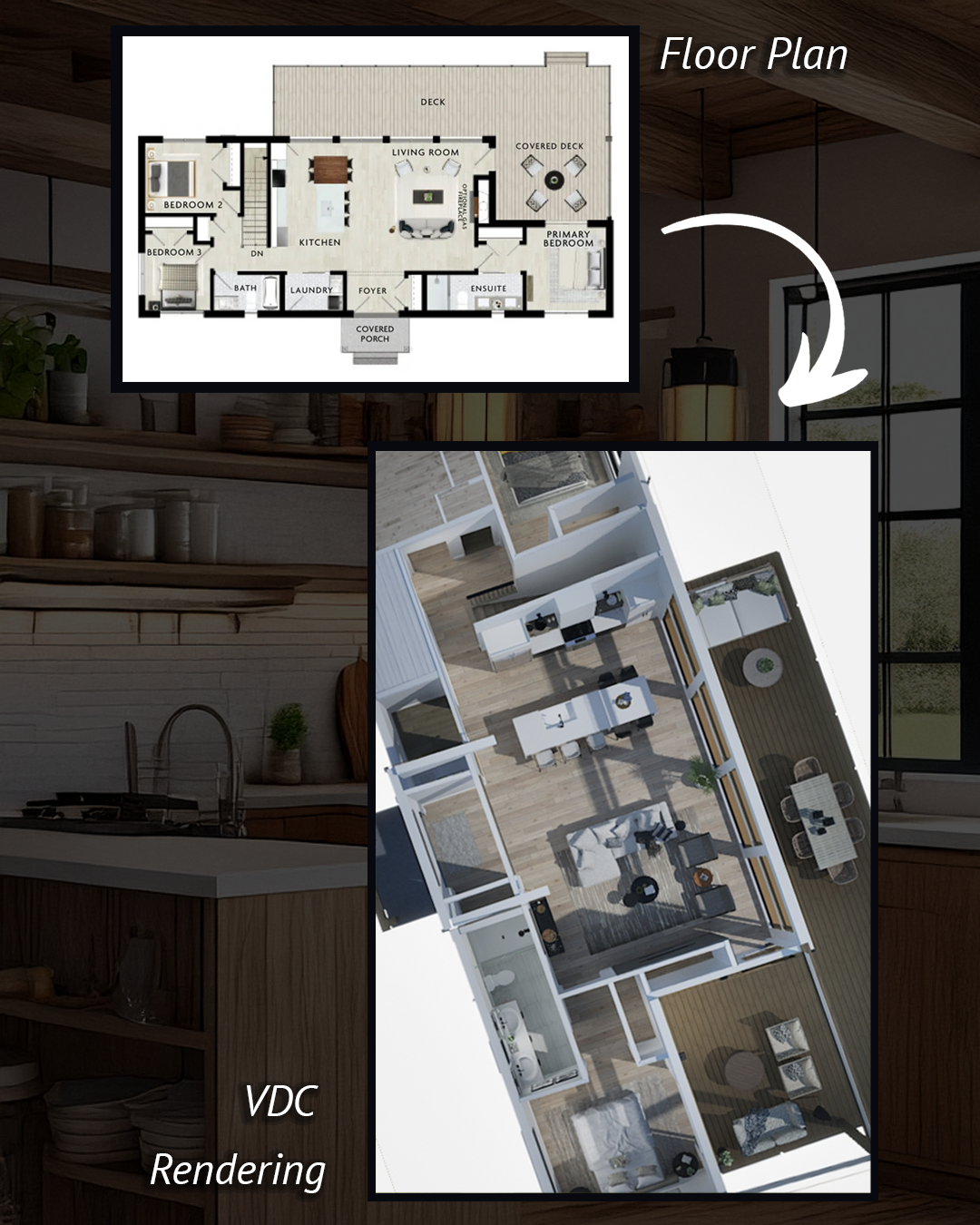
Unlike generative AI, our Virtual Design Center, relies on real‑world lighting, materials and geometry. When combined with BIM integration, it ensures that what you see is a faithful representation of what will be built.
Key benefits include:
- Consistency: VDC outputs remain true across different angles and devices.
- Verifiable accuracy: Inputs like CAD and BIM models ensure measurements and details are correct.
- Interactive exploration: With platforms like our VDC, clients can walk through spaces, toggle finishes and experience designs in real time, reducing misinterpretations.
The Future: AI Augmentation, Not Replacement
AI is a powerful tool when used in the right way. By combining AI with physically based rendering can speed up content creation when used responsibly. AI can suggest composition ideas, generate quick draft textures or streamline editing. However, final visuals should always be validated against real data.
Accuracy Builds Confidence
AI hallucinations are a hidden risk in modern real estate marketing. While fast and impressive at first glance, AI‑only renders can lead to confusion, delays and lost sales. By embracing platforms like the Virtual Design Center that prioritise data‑driven accuracy, you safeguard client trust and shorten the path from design to sale.
Ready to see the difference yourself?
Or, if you’d like a personalized walkthrough:
Follow Us On Social