
Virtual vs. Physical Design Center: Finding the Balance That Works for Builders
A practical, buyer-centric comparison for production builders and developers evaluating digital home customization, virtual design centers, and interactive home configurators, ending with a clear recommendation for a hybrid approach.
Why Compare Virtual and Physical Design Centers Now?
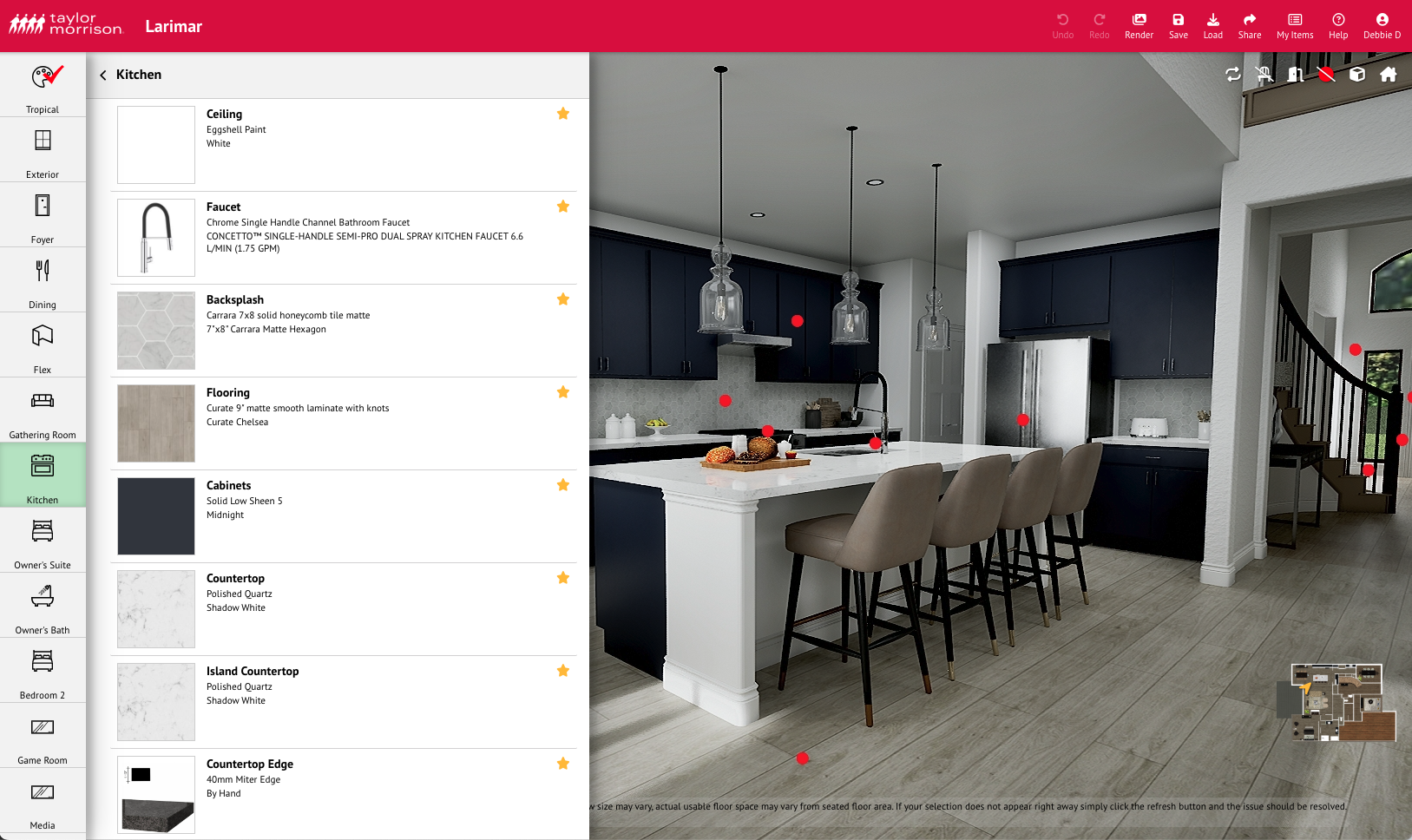
Selections are where decisions become commitments. Traditionally, those decisions were made almost entirely in a physical design center, a showroom with curated boards, material samples, and consultant-led walkthroughs. Today’s buyers expect flexibility, clarity, and time savings. A virtual design center supported by an interactive home configurator delivers those expectations: digital home customization, real-time visualization, transparent pricing, and higher confidence, often before a buyer ever steps into the studio.
Bottom line: most builders don’t need to choose one or the other.
A balanced, hybrid approach aligns with buyer behaviour while maintaining brand control and operational rigour.
Physical Design Center: Strengths and Constraints
Where Physical Excels
- Tactility: Touch, color nuance, and material feel matter for high-impact choices.
- Human guidance: Skilled consultants frame decisions, protect margin, and prevent rework.
- Merchandising: A well-curated studio builds trust and elevates perceived quality.
Operational Constraints
- Capacity-bound: Space, hours, and staffing limit throughput.
- Time-intensive: Multiple appointments and revisions slow cycle time.
- Cost profile: Real estate, sample refresh, and maintenance create fixed overhead

Virtual Design Center: What Digital Adds
A virtual design center brings the selections experience online, enabling buyers to explore options anywhere, anytime. Paired with a 3D home configurator, buyers see accurate visual outcomes and pricing as they customize.
Buyer experience:
- Real-time design visualization: Photorealistic views of kitchens, baths, and living spaces.
- Transparent pricing: Options, packages, and mortgage impact visible as buyers configure.
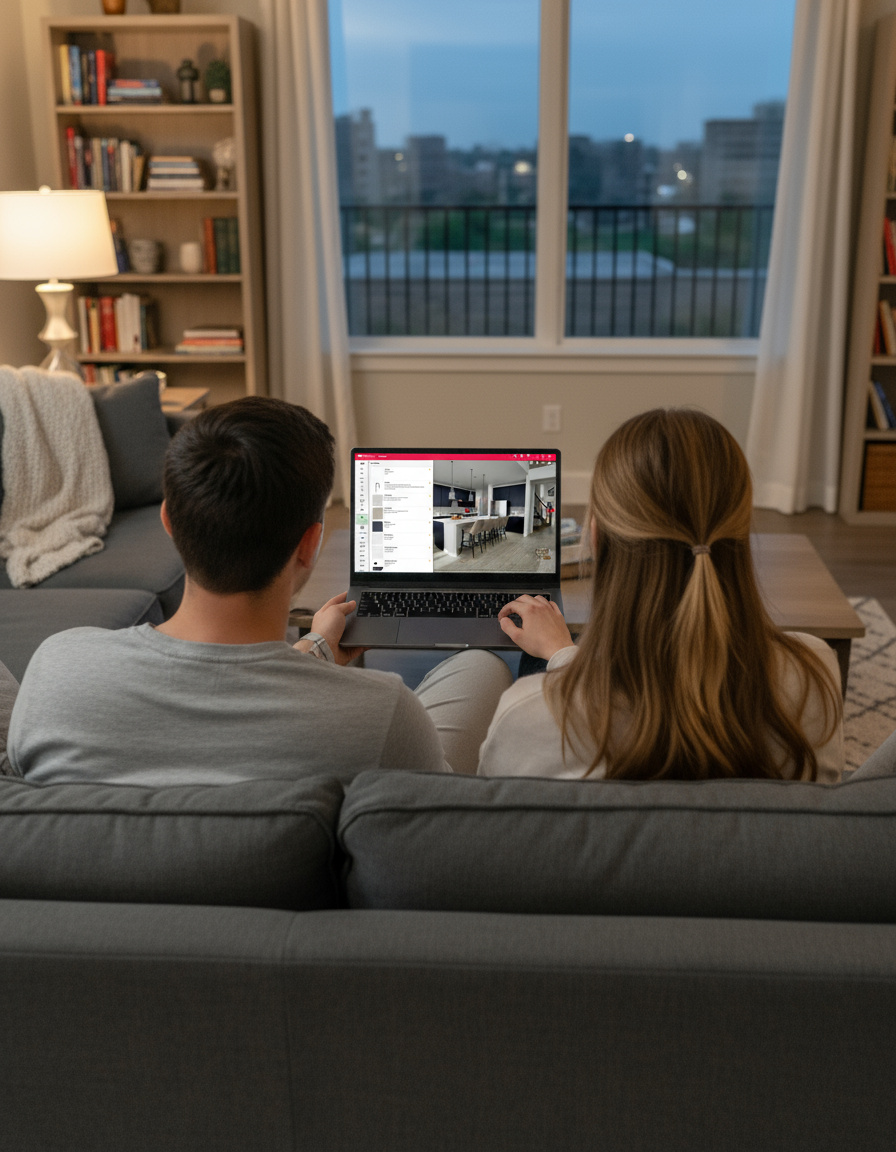
- Self-serve, consultant-ready: Online shortlists; in-studio time focuses on confirmation.
Builder value Scalability:
- Consistent standards across communities and geographies.
- Data & analytics: Preference trends and friction points inform product and margin strategy.
- Fewer reworks: Better visualization reduces expectation gaps post-close.
Side-by-Side Comparison
| Dimension | Physical Design Center | Virtual Design Center |
|---|---|---|
| Access | In-person, scheduled, capacity-bound | Anytime/anywhere, mobile-friendly, scalable |
| Decision Confidence | Tactile validation, consultant-led | Photorealistic context, scenario testing, saved favourites |
| Cycle Time | Multiple visits and revisions | Pre-selection online; shorter in-studio confirmations |
| Data & Governance | Limited behavioural insight | Usage analytics inform options, SKUs, and margins |
| Cost Profile | Fixed overhead (space, samples, staffing) | Lower physical overhead; investment in platform & visuals |
How the Home Configurator Complements Both Models
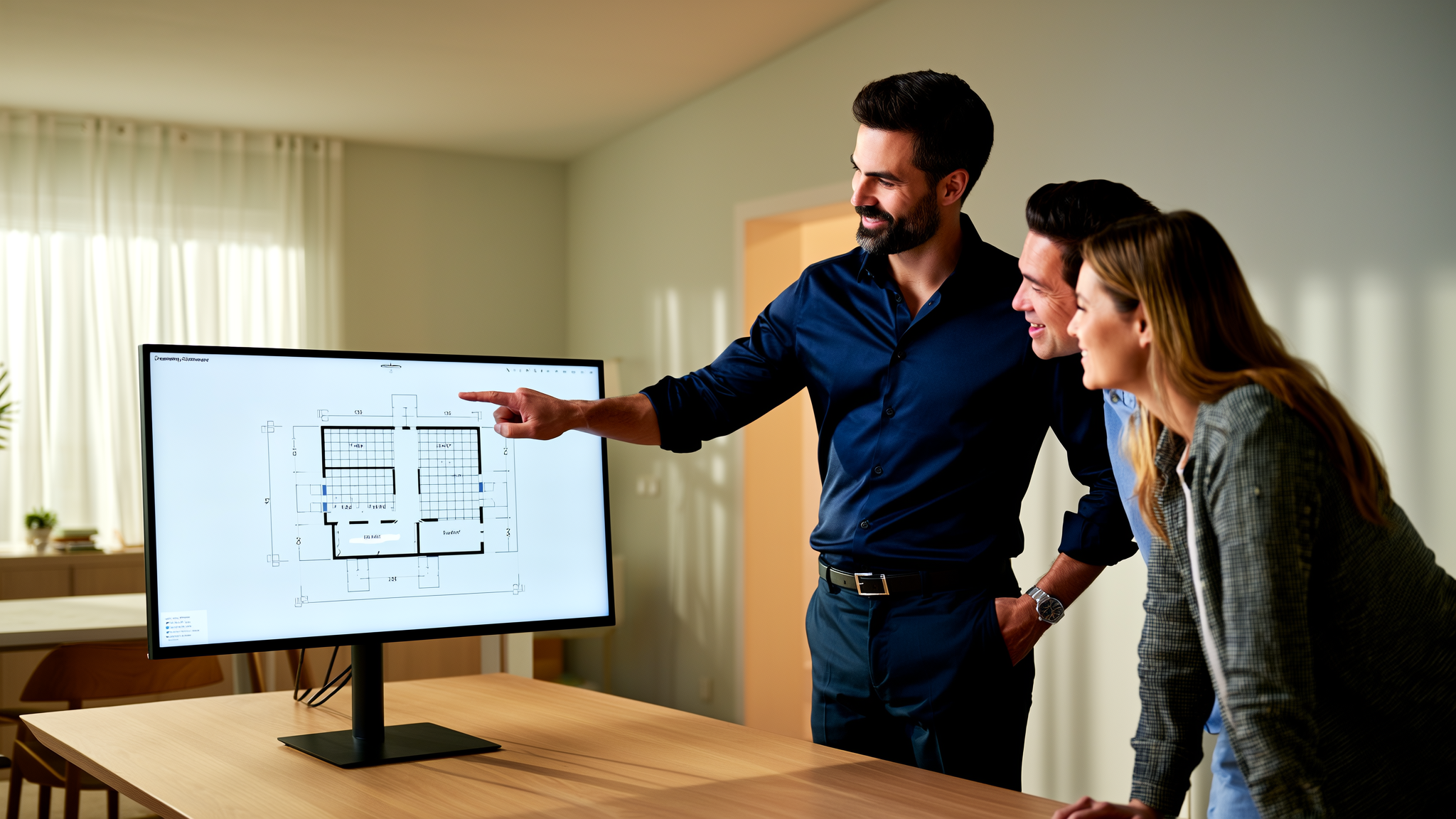
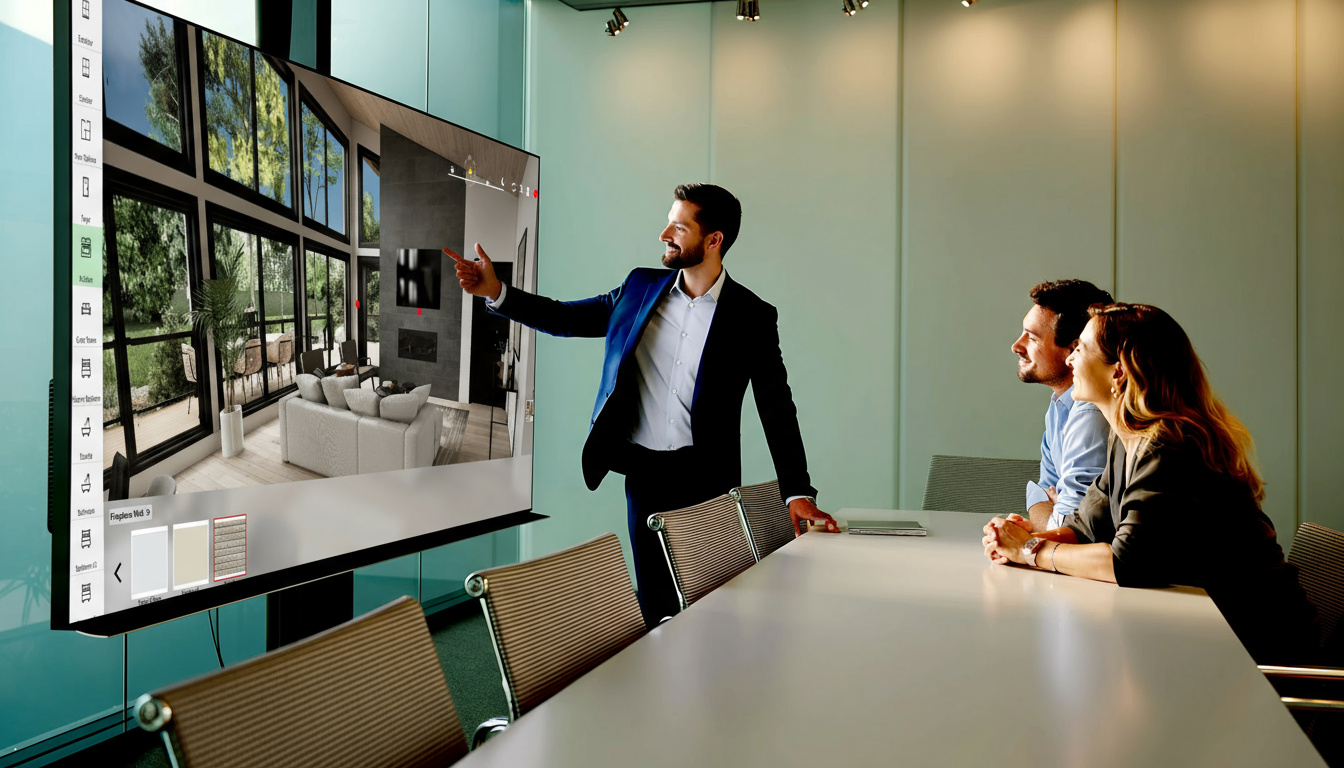
The Aareas Home Configurator connects online discovery with in-person confirmation. Buyers personalize layouts and finishes; the system enforces compatibility, packages, and pricing rules; consultants finalize the high-touch choices in the studio.
Treat the configurator as your single source of truth for options, finishes, pricing logic, and presentation. It reduces ambiguity, protects margin, and standardizes experience across communities.
Implementation: Moving to Hybrid with Confidence
- Pilot one community: Launch with a defined catalog and clear success metrics.
- Invest in visual fidelity: Photorealistic assets improve trust and reduce rework.
- Integrate systems: Connect the Virtual Design Center and Home Configurator to CRM/ERP for proposals, contracts, and payments.
- Enable your team: Train consultants on digital workflows and analytics-driven recommendations.
- Measure and iterate: Track selection time, upgrade rate, and change orders—then adjust catalog and messaging accordingly.
Conclusion: Choose the Model That Fits – Start Hybid
Every builder’s process is different. Some will operate 100% online through a virtual design center and 3D home configurator. Others will remain primarily in the design studio. In practice, most achieve the best buyer experience and operational outcomes with a hybrid design experience: explore and price options digitally, then confirm the critical tactile choices in person.
Aareas’ recommendation: start hybrid, then calibrate based on your buyers, communities, and team. The Aareas Virtual Design Center and Home Configurator provide flexibility, scalability, and a strong data foundation, modernizing your process without losing the human touch.


Follow Us On Social